
How To Choose the Right Outdoor Lighting Fixtures for Your Home
Wondering about the best ways to boost curb appeal and improve your home's functionality? Then it's time to consider exterior lighting. Join us as we explore how to select the perfect outdoor lighting fixtures for your property!
Consider architecture and style for outdoor lighting fixtures
The right outdoor lighting fixtures should complement your home's exterior and balance your entry. Here's how to choose the best solutions for your porch, yard, or walkway:
Match your home's style
There are tons of lighting options out there to match any architectural style. Here's a quick guide to the most popular combinations:
Modern homes: Cylinder sconces, flush-mounted fixtures, linear step lights, and recessed architectural lighting.
Traditional, colonial, and craftsman: Lantern-inspired shapes, decorative detailing, framed glass panels, and warm, inviting illumination.
Coastal, Mediterranean, and tropical: Soft silhouettes, textured or seeded glass, and a relaxed, ambient glow.
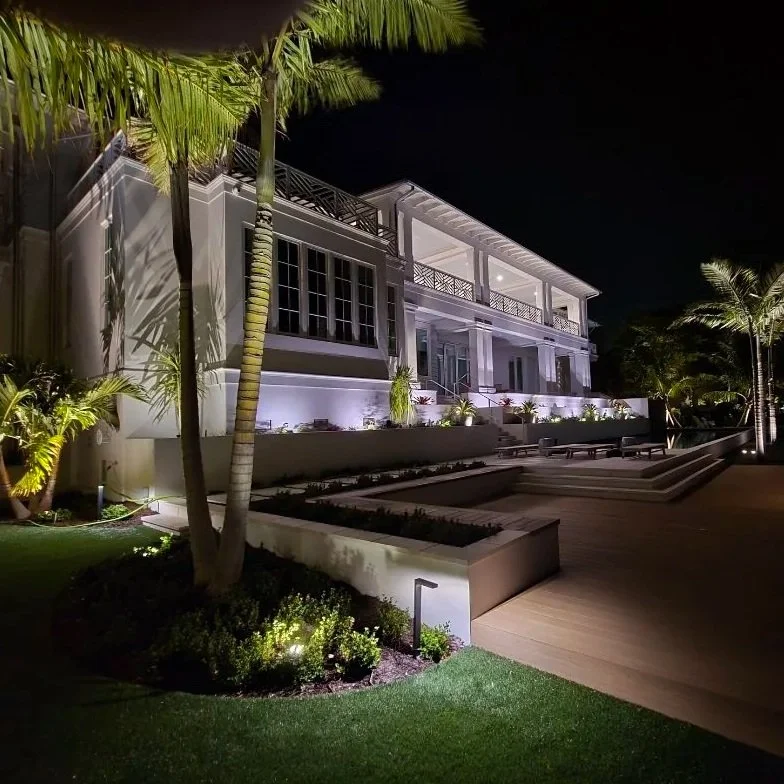
Select the right finishes
Stainless steel, aluminum, and matte black finishes are common in contemporary designs, lending a clean appearance to lighting fixtures. Meanwhile, bronze, copper, and other aged metals work well with the natural stone and wood found in traditional and Mediterranean homes.
Think about layering
Ambient lighting provides overall illumination from street lamps, hanging lanterns, sconces, and ceiling-mounted fixtures. Accent lighting adds drama by highlighting fences, trees, columns, and other focal points.
Task lighting improves visibility and usability along walkways, near steps, and on pool decks — though in many cases, well-aimed accent and uplighting elsewhere in the yard throws enough ambient spill to help light these areas naturally, reducing how many dedicated fixtures you need on the ground plane. A great lighting design carefully incorporates all three layers for cohesion, functionality, and optimal curb appeal.
Related:How Much Does a Commercial Irrigation System Cost?
Choose the right size and correct position
Placement and scale are just as important as the design of your lighting fixtures. Let's look at the best way to approach several common layouts:
Front door with one lighting fixture
A single lighting fixture can either be placed on the wall next to the front door or centrally mounted on the ceiling above the entry. Wall-mounted fixtures should be about one-third of the height of your door.
Avoid mounting it too high or using bright bulbs that create a glare. Large suspended fixtures can make a visual statement as long as they feel proportionate to the rest of the entryway.
Front door with two lighting fixtures
Dual fixtures framing the front door can be slightly smaller, about one-quarter of the height of the entrance. However, larger homes may support oversized fixtures for a more dramatic look without overwhelming the space.
Garage lighting fixtures
Double lights are a popular choice for garages. Ensure the fixtures you install match your home's aesthetic and are big enough to create visual balance next to the large doors.
Positioning your outdoor lighting fixtures
The best outdoor lighting layouts should be symmetrical, scaled to the architecture, and functional without feeling harsh. Think about how to best highlight features like columns, stonework, and rooflines while maintaining consistency across the property.
Brighten up your outdoor spaces withexterior lightingfrom SECond Irrigation!
Consider materials and durability
When it comes to choosing the right outdoor lighting fixtures, materials impact more than your home's curb appeal.
Environment and climate factors
Hot weather, high humidity, and torrential rains are all part of Florida's typical climate. These conditions can be hard on outdoor lighting fixtures, leading to corrosion, pitting, and equipment failure. Here are some characteristics to avoid:
Cheap, builder-grade fixtures
Thin painted steel
Low-quality metal finishes
Plastic housings
Outdoor lighting fixture ratings
As you shop for patio, deck, and backyard lighting fixtures, look for models that are rated for outdoor use. Several ratings systems exist, including:
UL Wet Rated: Required for decorative sconces, post lights, bollards, and other fixtures directly exposed to rain.
UL Damp Rated: For fixtures that can handle humidity but not direct rain. Used on covered porches, screened patios, and beneath eaves.
IP Ratings: Include various numbered ratings indicating the degree of water resistance.
Select quality materials for durability
Your chosen materials directly impact the lifespan of your exterior lighting systems. Whenever possible, opt for the following:
Solid brass: Durable and corrosion-resistant. Develops a desirable patina over time.
Copper: Antimicrobial and corrosion-resistant with a green patina appearing with age.
Powder-coated aluminum: Lightweight, rust-resistant, and cost-effective.
Does your sprinkler system need an improvement? Explore irrigation upgrades at SECond Irrigation.
Compare functional features
Of course, the right outdoor lighting fixtures should balance performance and aesthetics. Consider how your selection will function once installed.
Color temperature
Warm white light between 2700K and 3000K lends a soft, golden glow often described as upscale and inviting. It's the most popular choice for residential settings, especially front porches, garden beds, and other landscaped areas. Bright, cool LED lights are at the opposite end of the spectrum.
Though it's rarely used to improve curb appeal, it's ideal for security lighting and industrial or utility spaces. Neutral white lighting falls between these two extremes and is a popular choice for modern homes that require a crisper aesthetic.
Smart features
Automation takes outdoor lighting to the next level. Dawn-to-dusk sensors ensure lights remain on all night, motion-activated lighting along the driveway can alert you to visitors, and smart home integrations enable complete control over scheduling and lighting schemes.
Downlighting and moonlighting
Beyond standard uplighting, a well-placed downlight mounted high in a tree or on a structure can cast a soft, natural-looking glow downward over the landscape. This is something most lighting companies don't offer. These fixtures often come as hanging ring mounts or decorative pendant-style pieces, typically run at low wattage, and use a warm 2700K color temperature to keep the effect gentle and natural.
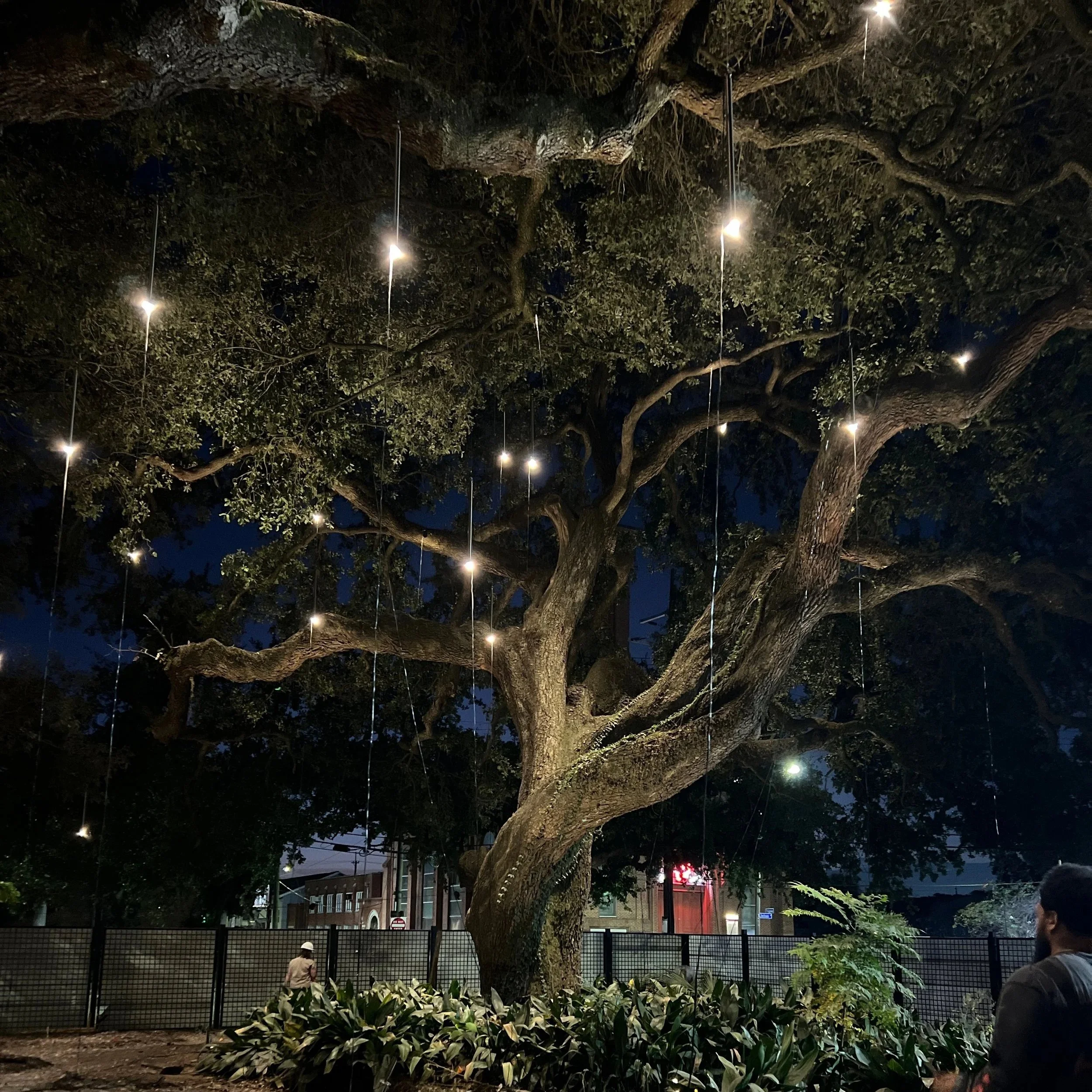
For the right property, moonlighting takes this technique further. A 7-watt or higher lamp at a cooler 5700K paired with a blue lens, mounted at least 45 feet up in a mature tree, produces a soft, dappled blue-white light that mimics real moonlight filtering through the canopy. It depends on having the right tree specimen and property to pull off, but where it fits, it's one of the most distinctive effects available.
Dark sky compliance
The lights you install outside your house also impact your neighbors and nearby wildlife. Some municipalities and HOAs enforce strict dark sky ordinances that call for full cutoff fixtures and no uplighting at all. If yours does, check local codes before you design your layout.
For everyone else, you can respect dark sky principles without giving up accent uplighting or downlighting altogether. A few guidelines to keep glare and light pollution in check:
Fully shield fixtures and aim them carefully so light stays on the feature you're highlighting rather than spilling onto neighboring properties or into the sky.
When uplighting or downlighting trees and structures, use focused fixtures rather than broad floods to keep the light contained.
Favor warm color temperatures over cool white bulbs.
Keep brightness in check — roughly 400-800 lumens for entryways and 100-200 lumens for landscape accents.
Upgrade your space with outdoor lighting fixtures at SECond Irrigation
SECond Irrigation is your source for professional outdoor lighting design and installation. Contact our team today to explore your options!